4K 144fps HDR Scope 3-D cinema now - let me blow your mind and open your eyes
The 4K 60fps 15-stop HDR Scope 3-D digital laser cinema projection that is going to be introduced in and around 2013 is going to blow your mind in terms of image brightness, sharpness, contrast, saturation and image calmness. You will not want to leave the cinema theater ever again once you have seen a presentation using this very high spec digital cinema technology and to be honest, it will be hard to technically go one better on this system once introduced because it present images close to the limit of the human eye and brain's resolving power. Of course the film you will be watching needs to have been shot and post produced using equally high or higher specifications, which is currently really very hard to accomplish, but not completely impossible. A key point in cinematographic sense in that high framerates and high resolution do make the imagery on screen look 'more real' exactly because it is closer to human visual resolve - but do you want the images to look more real or more 'cinematic'? High framerate material quickly looks like video rather than film, so post production does come into play in a serious way to make it look both more real AND more cinematic. Interested? Talk to 3-D Revolution Productions about producing in ultimate spec 3-D.

The latest Lord of the Rings film 'The Hobbit' is being shot for 48fps 12bit 4K 3-D presentation, even when very few cinemas will be able to show it in this format by the time of release before the end of 2012. This is not helped by the fact that the DCI (Digital Cinema Initiative) has not yet released an update to their 1.2 spec detailing frame sizes and bitrates to accommodate the proposed high spec cinema experience. And well, cinemas worldwide have just or are still taking the step from 25mm to 2K digital projection. The 2K projectors are not going to get chucked out within one year! Right now, DCI compliance goes as far as 2K 3-D at 24fps @ 12bit XYZ, 4K 2-D at 24fps @ 12bit XYZ or 2K 2-D at 48fps at 10bit in XYZ color space - all due to a restricting encoding and playback bitrate of 250Mb/s (31MB/s) Compare this to the Red Epic in-camera bitrate of 1.8Gb/s (225 MB/s) - and this is still only limited to 14bit, with Bayering.

It is perhaps no surprise that there is talk of the upcoming availability of 4K 3-D digital cinema servers in combination with laser projection to be coming from RED, employing the Redcode wavelet compression format rather than Jpeg2000 wavelet. Bitrates will be comparatively low, but decoding needs to be dedicated to facilitate the 12:1 to 18:1 decompression.
The upcoming projection (and home cinema) systems will be using a very particular set of numbers in its aspects that are logical multiples of 8 - the base number for present day computing. However, and this is not me losing my mind after endless number crunching but rather a slight detour into the mysteries of history, the numbers employed could easily be seen as an implementation of magical, sacred numerology as found in construction, drawing and writing on Earth for over 12,000 years. In other words Hermetical, Kaballistic, Sumerian and Druidic numerology. This is not just a random idea - it actually makes a lot of sense to employ human, Earth and celestial-based geometry in design and technology since the results will be in tune with our inborn expectations of form and look not just pleasant to the eye, but 'in sync', natural and optically correct.
Either this, or ancient numerology is based on an 8-bit system - which in itself is an even more mysterious consideration. Was the Great Pyramid of Giza a power station after all? Well, let's not get ahead of ourselves here - first things first.
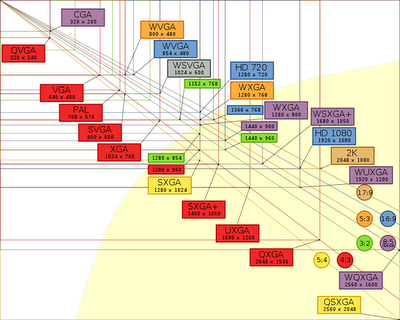
The best place to start are the household numbers of HD's resolution: 1920x1080. 1920 is 3x 640, which is SD NTSC's screen width (640x480 in square pixels), 20x32 and 8x135. So far nothing out of the ordinary, since 8 is the number of current computing, where 1 byte has 8 bits and multiplications happen by a factor of 8. To come to a number of 640x480, 1280x720 or 1920x1080 is in that respect not surprising, but one would expect values based on the visual field aspect (and the golden ratio) of 1.618 or 8:5 making 2048x1280 or 1744x1080, rather than the 1.78 that is 16:9 (1920x1080) or 1.85 and 2.39 that are Flat and Scope digital cinema (1998x1080 and 2048x858). One screen that gets close to this aspect ratio: the Nintendo 3DS. Is it aspect of 1.66 comfortable on the eye? Incredibly so!
As is clear, an oval or more of an upside-down triangular-shaped screen (see also the eyes-nose saccade sampling triangle) would be the most comfortable screen shape as this fits closest with the visual field's heart-like-shape (overlaid, a double kidney shape) and this would also be a much more logical choice in terms of getting the most value out of camera lenses, being circular themselves, besides digital camera sensors, which are normally square. Perhaps a future follow-up after 4K 144fps 15-stop HDR 3-D laser projection has run its course in 2018. Gotta keep upgrading those projectors and screens!
The golden ratio of 1.618 (Phi) is one of the human body and it can be used to subdivide the human body to the smallest detail. The Ancient Greeks were crazy about the number and saw in it a truth of the Universe. However, later mathematicians came up with - or recycled - much more profound numbers that show up not just in human beings, but everywhere in nature. Fractal based mathematics, the Fibonacci sequence (0, 1, 1, 2, 3, 5, 8, 13, 21, 34, 55, 89, 144, 233, 377, etc.) and Phi (1.618). Framing of the Golden Square(s) can happen selectively within a frame of non-1.618 proportions, like the HD and 2K frames. More often than not thins means a Golden Square leaning against the left or right edge of the frame.
All equations and numbers that can be found in nature, timeless building work, art and now digital cinema technology. Perhaps it is pure coincidence, perhaps the numbers chosen were done so with a numerological purpose. Leonardo DaVinci, for example, was friends with Luca Pacioli, who rediscovered the sacred geometry and the Golden Square. No surprise then that DaVinci employed this geometry in his art and design - and this tradition carries on to today. Regardless of style and a mystical aspect, there is an underlying truth about numbers that work for us and lie at life's basis. So it is very important to look at these numbers and their relationships to come to a perfect state of the art of film making, in 2D and in 3-D. At 3-D Revolution Productions I strive to take the medium of 3D film making to the next level and have done so for over 12 years now. Have I found the Golden Formula of perfect 3-D then? Yes, and let me tell you what it is. What 3-D film making is really about is looking at the imagery shot by shot, scene by scene and sequence by sequence. No two scene depths are alike, focal lengths changes, lighting, actor and prop placement and movement, followed by compositing and editing plans and decisions. A golden formula takes a 3D film maker to step one, the other 32 steps are the place where science meets art and experience meets challenge. The formula is hands-on 3-D stereoscopic cinematography and only this way perfection in 3-D cinematography can be attained.
Before looking at magical and sacred numerology and how it may link into digital film and television numbers, the first port of call is realizing the magic of the camera lens itself. A normal, every day object to you and me, perhaps in our mind an object only worthy of a sideways glance, but actually a device that has propelled mankind from the Middle Ages into the age of Space Exploration and Quantum mechanics. The lens allows us to see the Macrocosm (telescopes) and the Microcosm (microscopes), draw and record life as it truly is (camera obscura, photo camera, film camera) and of course project those images back onto a screen for limitless reply. The lens is mankind's great educator and represents the ultimate Hermetic tool for understanding the Universe and to live in balance with that Macro cosmos. What the lens has done for us is to ultimately show us the origin of our Universe (the Big Bang) and the very particle that makes defines it (Higgs-Boson) - even when the optical lens was a stepping stone to telescopes that operate on non-visual bands of the spectrum and the LHC works with electronic detectors to capture the particles at the moment of their light speed crash. The lens has shown us the face of God and the number of God, recorded and played back on our television sets and in IMAX 3-D. Wow.

Allow me a detour dalliance with a personal theory linking lenses to Ancient knowledge. It all starts with a particular fresco (the one below) in relation to the Orion nebula (and the back of the US Dollar Bill). Why is this relevant? Well, there appears to be a connecting line between ancient geometry and measurements and the art and architecture of Renaissance and Baroque artists, followed by a continued use by designers, architects and engineers now calling themselves Masons. The Dollar Bill is an excellent in-your-face example of the connection between ancient Egypt and the preservation of their knowledge. And yes, this could possibly continue in digital cinema (the point of this blog entry) just so this digital cinema sits well within an ancient technological tradition.

See above the nave fresco as found in the Church of the Gesu in Rome, Mother church of the Jesuits. Jesuit priest-scientist Athanasius Kircher (died 1680) is considered the founder of Egyptology, having translated the first hieroglyphs. Ancient Egyptian knowledge was thus part of Jesuit knowledge. Kircher was well familiar with the Egyptian obsession with Orion (and its obvious cross shape) and its personification by Osiris ("The Heavenly Shepherd") and his son Horus (the eye at the top of the Pyramid). So where is the link? It all makes sense if you consider the possibility that the Great Pyramid of Giza was actually a telescope - or at least that may have been one of its functions. I refer to the airshafts pointing at various stars and constellations, where electrical engineers have noted the dimensions of the airshafts in the King’s chamber (pointing at the Orion Nebula) are 21.1 cm and 14.3 cm. This indicates knowledge of the design criteria for waveguides of the hydrogen line. The hydrogen line, having a wavelength of 21.1 cm and frequency of 1.43 GHz, is used extensively in radio astronomy and is the only form of electromagnetic radiation capable of passing through our atmosphere and reaching distant systems in our galaxy. OK, who knows, and what would be the harm of it all if this were actually true? It would be an amazing realization.
The most logical explanation is one of Jesuit astronomers and their new access to the telescope. Traditional history tells of the first telescope having been built in 1608 by a pair of Dutch opticians (nope, it was not stereoscopic, despite how logical that would have been). Refraction of light was already known by Ancient Greeks - so why no enlargement? In 1668, Isaac Newton built the first practical reflecting telescope. The first discovery of the diffuse nebulous nature of the Orion Nebula is generally credited to Nicolas-Claude Fabri de Peiresc, in 1610 when he made a record of observing it with a refracting telescope. The first published observation of the nebula was an account by Jesuit mathematician and astronomer Cysatus of Lucerne in a book about a bright comet in 1618. It was independently discovered by several prominent astronomers in the following years, including, in 1656, Christiaan Huygens (whose sketch was the first published, in 1659).
In short, the Orion Nebula was well known to the community of scientists and artists and specifically to Jesuit ones. It is therefore no stretch of the imagination that the fresco in the Church of the Gesu is a representation of the nebula. But why is it called the name of Jesus? Does Gaulli simply remind us that the story of Jesus may well have come from the story of Horus, son of Isis ("The mother of the king") and Osiris ("Lord of the Sky")?

On to HD then. 1080p stands for progressive 1920x1080 25 or 30 frames per second television. The number 1080 appears in ancient Egyptian writing as well as the radius of the Moon in ancient miles, while the number of 8k Cinema - 7920 - is the diameter of the Earth in ancient miles. That's 4x 1920 or 11x720. The number 720 we recognize from the 'HD-Ready' 720p, the screen resolution of 72dpi and the non-square PAL resolution of 720x576. 720 and 72 are divisible by 8, no problem, but 72 is also the number of the names of God in Kaballism and Jacob's Ladder (the stairway to heaven) has 72 steps. 72 is 30x2.4 so it really is an important number in the Hermetic tradition. 11 is definitely a very symbolic number - specifically in Masonic and it ancient occult / Hermetic source tradition, where it represents the two pillars of Boaz and Jachin, the Sun and the Moon, Earth and the Cosmos, light and dark, male and female, the gateway to knowledge and the unknown. 11 also comes before 12, the number of the sacred aspect of 1.2 (2.4), which is flanked by 13 on the other side - an unlucky number in Western culture. So 11 and 13 also form a pair together, flaking the number of the Cosmos.
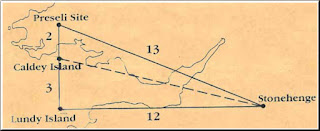
Why 1.2 then? 6 divided by 5, where 6 represents the Macro Universe (the Cosmos) and 5 the Micro Universe (Earth and Man). 'As Above, so Below' Hermetics and Masons say, and this means that what is seen in heaven, 6, must be copied below, 5, to enable harmony and the flow of energy. 5+ 6 is indeed 11: ultimate balance. The resulting aspect ration of 1.2 and 2.4 are thus used in ancient structures and distances between ancient structures such as the Great Pyramid, Stonehenge, Angkor Wat, St Peter's and the modern Washington Monument (to name just four - 666 and 6660 to 555 is the most often used measure), but also as the aspect ration of Scope cinema. Not surprisingly, the number 2.4 is also the Golden Angle in radians as defined by the Fibonacci sequence. Basically, when Ancient man saw this number return again and again in their computations, they called it sacred and magical and you can either argue that once the magical number is found, the diameter and radius of Earth and the Moon can be calculated, or it somehow happened the other way around. 2.39 is close enough to 2.4 - unless I am reaching here.
Besides being divisible by 8, 2048, 1920 and 640 can also all be divided by 32. The significance of the number 32 is great, where in Judeo/Christian and Buddhist religions 32 represents the plan, the diagram, of the various forms of creatures modeled by the Creator. 32 is also 4x8, which is considered the sacred formula of the Creator (the Great Architect). But this is somewhat of an obvious point since 32 is a multiple of 8.
It gets even more interesting when framerate is considered. From the old 24fps for film to 25fps and 29.97fps for television, there is now a step up to 50 and 60fps and then 96fps and 144fps. Projection tests have shown that human eyes prefer imagery of 60fps over both lower and higher framerates, but 72fps was not tested as a framerate. 24fps is of course 3x8fps, and it was chosen as a framerate for film because together with a triple shutter it presents 72 images (3x the same image) to the eyes, which is enough to make the brain believe the image stream is seamless. Presenting true 72fps with no shutter other than betwen actual frames would make for a truly natural film experience. But for now it's either going to be 60fps (2x29.97fps), 96fps (4x24) or 144fps (6x24 or 2x72).
So there is a link between ancient miles, Earth, Moon and Sun and digital cinema numbers - the number 8 and the ratio of 1.2. Is it all related? Well maybe so and maybe not - people like Pythagoras, daVinci, Durer, Bohme, Newton, Washington and Kubrick were all very busy putting these numbers in their work and trying to find relationships between them. The issue is that this kind of linking of numbers and significance creates a closed loop of argument, but if there really is a relationship there it is obviously important to uncover it and share it with the world - even if it is only through beautifully framed, paced, formatted and projected movies.
People often wonder about mysterious artists 'What did they know and when did they know it?'. Focusing on 3-D knowledge, the question that must be asked is what do 3-D Stereoscopic companies know and when did they learn it by? Through 3-D Revolution Productions I have known and understood the inner working of the 3-D film frame for over 12 years - and I happily continue to learn. As Socrates stated: Ultimately, 'I know I do not know' - we can but learn.

In all this one has to be aware of the fact that in the history of cinema and television the size and aspect ratio has not always been equal to sacred numbers or divisible by them. For instance, from 1895 to 1953 film sizes have included 35mm, 51mm, 55mm, 63mm, 70mm and 75mm, with projected aspects of 1.33:1, 1.37:1, 1.66:1, 1.75:1, 1.85:1, 2.21:1, 2.52:1 and 2.6:1. So there is definitely a certain current leaning towards sacred numbers over just random ones - even if this is simply because the digital world works in 8's.
The Masonic 'As above, so below', is a concept loved by film production companies and they are eager to show it in their names. 'Orion', being the most obvious, but also 'Universal', 'Lions Gate' (the 'Golden Gate' leading to heaven in Orion), 'Tri Star-Columbia' (Tristar being the sword of Orion, Columbia being Isis at the top of the 13-step pyramid, holding the light of the star Sirius), 'Paramount' being the Mount of Olympus, the realm of the gods and/or the Pyramids of Giza, and 'Dreamworks' showing a fishing boy in a crescent Moon against the Milky Way bringing to mind the high priestess of the Tarot and thus possibly invoking the spirit of Isis ("Moon Shining Over the Sea.").
Yes, even Disney starts its film logo with a shot of the stars, moving down to their castle. But wait, looking closer at the castle, a pyramid shape appears effortlessly and the angle of its slopes: yes indeed, the 52 degrees of the Great Pyramid. Even the size of the famous plastered tip matches perfectly to the geometry in the castle. So if the Disney Castle is the Great Pyramid of Giza, let's overlay the position and angle of Orion onto the logo in relation to the Great Pyramid at dawn: again a perfect fit - those stars in the Walt Disney Pictures logo are faint, but they certainly match. The top of the Orion constellation then touches the top of the highest tower, where the flag displaying the Disney family crest is touching the hand of the Father God in a similar way to God touching Adam in the Michelangelo nave fresco of the Sistine chapel. In real world relation to Orion, the position of Sirius falls exactly on the lower right tower. The eye of Horus then adorns the pyramidal roof over the main gate. Above this, although somewhat hard to make out, the High Priestess that is Isis can be seen sitting on her throne between two pillars, adorning the Sun and Moon on her head, in the tip of the main pyramid shape. Isis, the mother of the first Pharaoh (God's son), Horus, sits over the entrance of the Golden Gate, below Isis, while Osisris points his Orion's belt (male 'sword', rather) at her. The result is the entrance to a Heavenly palace where magic happens. Whee! The whole thing is then topped off by the obvious element of the location on the river bank, which invokes the ancient position of the river Nile.
Showing a Pyramid at the front of every movie and television programme produced or distributed by Disney means they really do wish to invoke the power and protection of the gods and the 'As Above, So Below' flipping of the Pyramid to make a Star of David fits tips of spires and Disney lettering as well - mind you, this is a Masonic / Hermetic tradition and here, has little to do with the Star of David (much though this is the same symbol). It is certain, however, that Disney Pictures is invoking the spirit and power of Osiris, Isis and Horus here for success, protection and instinctive audience approval. You have to admit: it has certainly worked for Disney so far! As such I wouldn't say it is an evil or sinister thing to do and I can understand the (historical, religious) reasons why people invoking the power of the stars have to keep the symbology hidden in plain sight. Especially when you are the biggest media company in the world or indeed the first president of the newly formed United States of America, city builder of Rome, Paris or the City of London.
The logo of '3-D Revolution Productions' only refers to the Russian Revolution and the 3-D resurgence of 1999 to today and tomorrow. A nod at the sacred geometry that 3-D can and should be is the new motto of 3-D Revolution Productions: 'Ut Uno Oculo, Duo Aeque': 'As with one eye, so with two'. Ultimate cinematography in 2-D as well as in 3-D, not despite the 3-D.

Contact us:
Tel. +44 1179 441 449
info [at] the3drevolution.com


The latest Lord of the Rings film 'The Hobbit' is being shot for 48fps 12bit 4K 3-D presentation, even when very few cinemas will be able to show it in this format by the time of release before the end of 2012. This is not helped by the fact that the DCI (Digital Cinema Initiative) has not yet released an update to their 1.2 spec detailing frame sizes and bitrates to accommodate the proposed high spec cinema experience. And well, cinemas worldwide have just or are still taking the step from 25mm to 2K digital projection. The 2K projectors are not going to get chucked out within one year! Right now, DCI compliance goes as far as 2K 3-D at 24fps @ 12bit XYZ, 4K 2-D at 24fps @ 12bit XYZ or 2K 2-D at 48fps at 10bit in XYZ color space - all due to a restricting encoding and playback bitrate of 250Mb/s (31MB/s) Compare this to the Red Epic in-camera bitrate of 1.8Gb/s (225 MB/s) - and this is still only limited to 14bit, with Bayering.

It is perhaps no surprise that there is talk of the upcoming availability of 4K 3-D digital cinema servers in combination with laser projection to be coming from RED, employing the Redcode wavelet compression format rather than Jpeg2000 wavelet. Bitrates will be comparatively low, but decoding needs to be dedicated to facilitate the 12:1 to 18:1 decompression.
 |
| The 4K Scope figure here is a true 4K scope, not anamorphic 4K or 4096x1716. Reason to include it is the Philips 21:9 Scope television with its true scope pixel aspect ratio. |
 |
| Earth and its divine proportions all into one |
 |
| Milan Cathedral employing sacred geometry in its plan |
Either this, or ancient numerology is based on an 8-bit system - which in itself is an even more mysterious consideration. Was the Great Pyramid of Giza a power station after all? Well, let's not get ahead of ourselves here - first things first.

The best place to start are the household numbers of HD's resolution: 1920x1080. 1920 is 3x 640, which is SD NTSC's screen width (640x480 in square pixels), 20x32 and 8x135. So far nothing out of the ordinary, since 8 is the number of current computing, where 1 byte has 8 bits and multiplications happen by a factor of 8. To come to a number of 640x480, 1280x720 or 1920x1080 is in that respect not surprising, but one would expect values based on the visual field aspect (and the golden ratio) of 1.618 or 8:5 making 2048x1280 or 1744x1080, rather than the 1.78 that is 16:9 (1920x1080) or 1.85 and 2.39 that are Flat and Scope digital cinema (1998x1080 and 2048x858). One screen that gets close to this aspect ratio: the Nintendo 3DS. Is it aspect of 1.66 comfortable on the eye? Incredibly so!
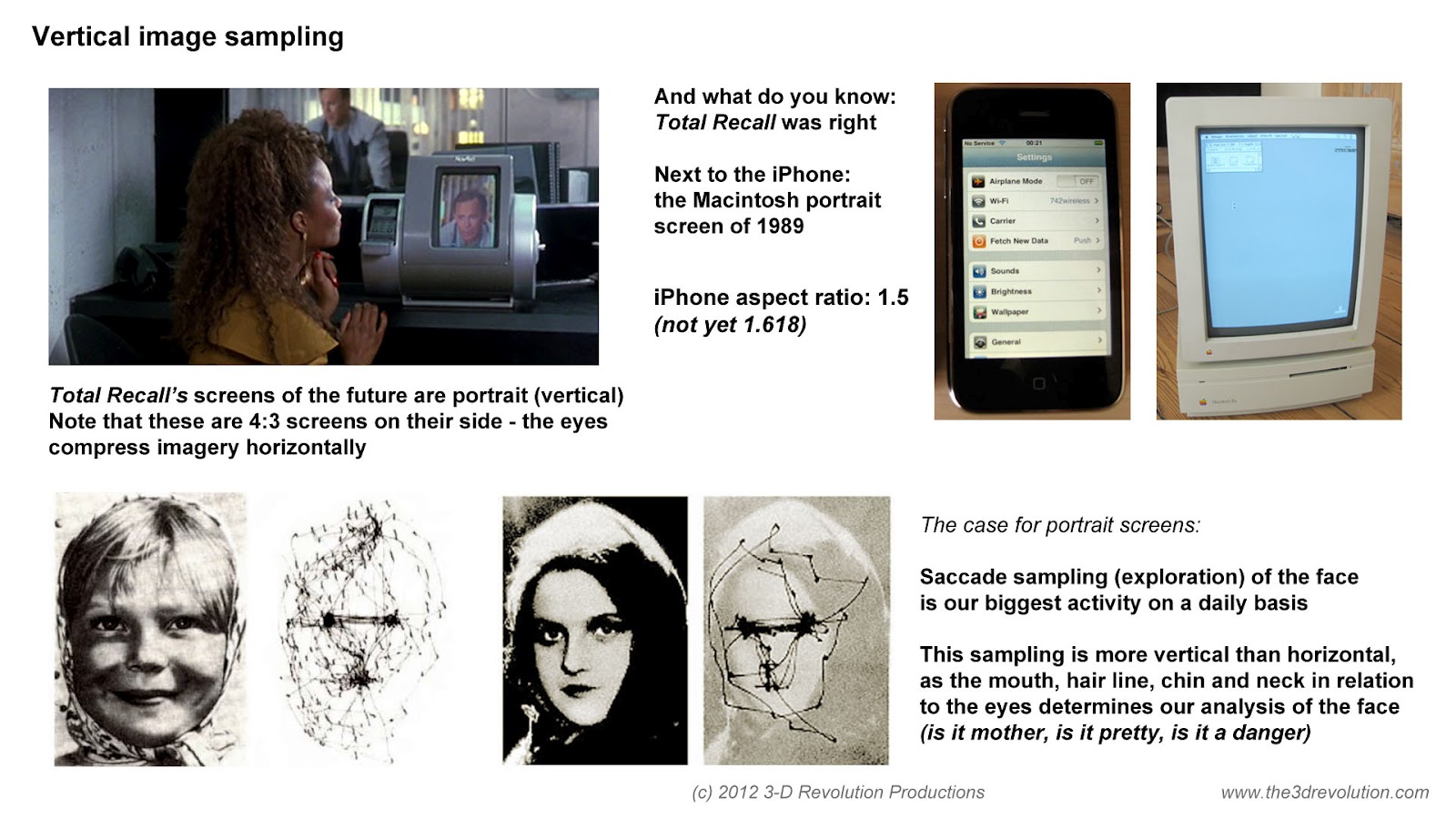 |
| Portrait screens and their logical relation to vertical saccade sampling of the human face, besides the introduction of the inverse pyramid to our visual preference from day 1 of seeing |
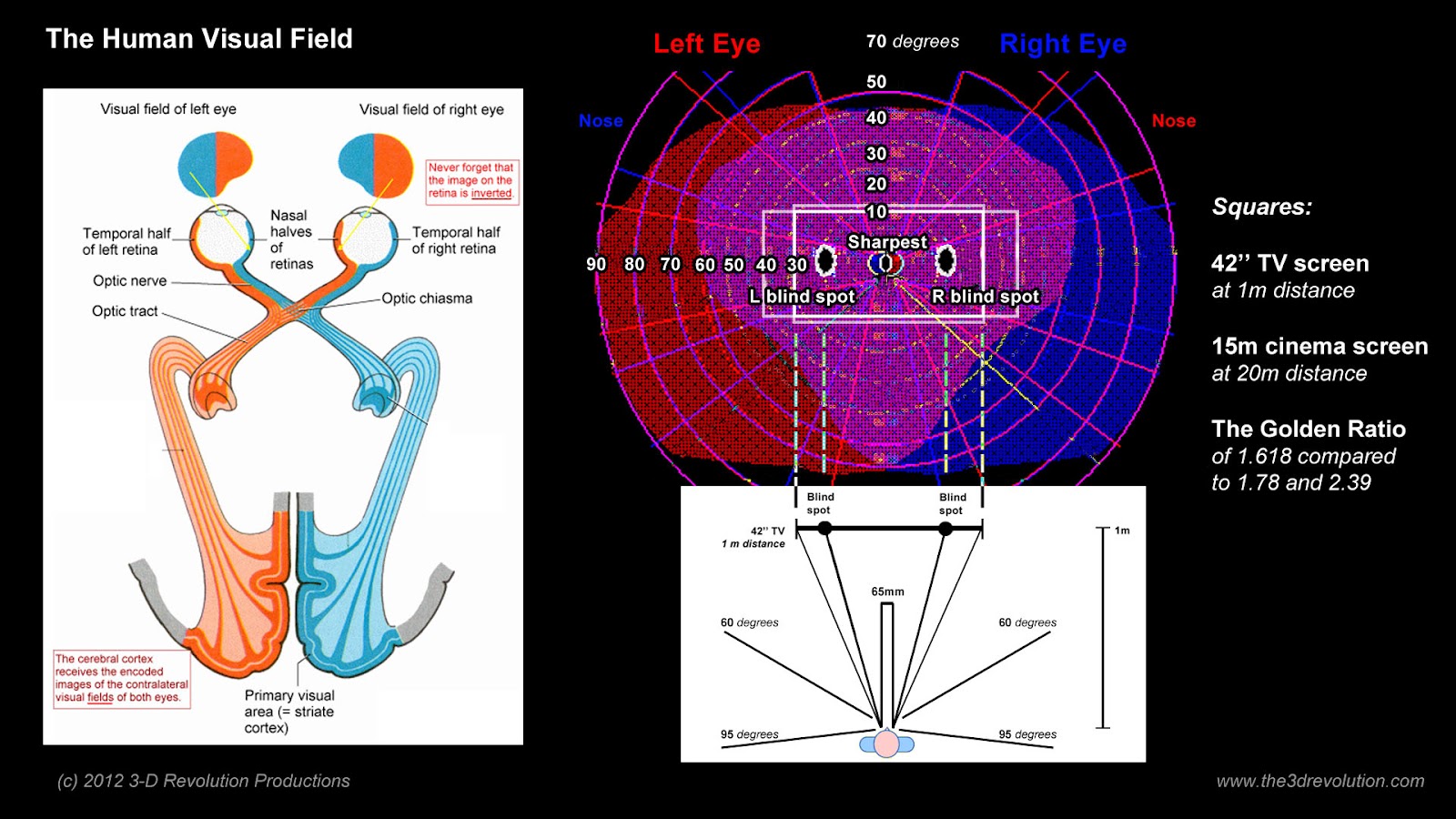 |
| The human stereoscopic visual field in relation to screen size as aspect ratio, screen distance. Unique research by 3-D Revolution Productions |
As is clear, an oval or more of an upside-down triangular-shaped screen (see also the eyes-nose saccade sampling triangle) would be the most comfortable screen shape as this fits closest with the visual field's heart-like-shape (overlaid, a double kidney shape) and this would also be a much more logical choice in terms of getting the most value out of camera lenses, being circular themselves, besides digital camera sensors, which are normally square. Perhaps a future follow-up after 4K 144fps 15-stop HDR 3-D laser projection has run its course in 2018. Gotta keep upgrading those projectors and screens!
 |
| We are made of Phi |
 |
| Fibonacci block |
 | ||
| Fibonacci sequence showing up in the pattern of a Chamomile under a divergence angle of 137.51°=2.4 radians, the Golden Angle |
The golden ratio of 1.618 (Phi) is one of the human body and it can be used to subdivide the human body to the smallest detail. The Ancient Greeks were crazy about the number and saw in it a truth of the Universe. However, later mathematicians came up with - or recycled - much more profound numbers that show up not just in human beings, but everywhere in nature. Fractal based mathematics, the Fibonacci sequence (0, 1, 1, 2, 3, 5, 8, 13, 21, 34, 55, 89, 144, 233, 377, etc.) and Phi (1.618). Framing of the Golden Square(s) can happen selectively within a frame of non-1.618 proportions, like the HD and 2K frames. More often than not thins means a Golden Square leaning against the left or right edge of the frame.
 |
| 'Eternal Sunshine' works as a movie on many levels and not in the least visually This particular set of plates also illustrate the protagonist's blending into his surroundings - literally |
 |
| Tangled: incredible layout in 2D and in 3-D. Utterly brilliant. |
 |
| With Fibonacci it always sits nicely, DaVinci shows masterful understanding of the Golden Squares on the Mona Lisa |
All equations and numbers that can be found in nature, timeless building work, art and now digital cinema technology. Perhaps it is pure coincidence, perhaps the numbers chosen were done so with a numerological purpose. Leonardo DaVinci, for example, was friends with Luca Pacioli, who rediscovered the sacred geometry and the Golden Square. No surprise then that DaVinci employed this geometry in his art and design - and this tradition carries on to today. Regardless of style and a mystical aspect, there is an underlying truth about numbers that work for us and lie at life's basis. So it is very important to look at these numbers and their relationships to come to a perfect state of the art of film making, in 2D and in 3-D. At 3-D Revolution Productions I strive to take the medium of 3D film making to the next level and have done so for over 12 years now. Have I found the Golden Formula of perfect 3-D then? Yes, and let me tell you what it is. What 3-D film making is really about is looking at the imagery shot by shot, scene by scene and sequence by sequence. No two scene depths are alike, focal lengths changes, lighting, actor and prop placement and movement, followed by compositing and editing plans and decisions. A golden formula takes a 3D film maker to step one, the other 32 steps are the place where science meets art and experience meets challenge. The formula is hands-on 3-D stereoscopic cinematography and only this way perfection in 3-D cinematography can be attained.
 |
| A camera obscura, the principle of the lens |
Before looking at magical and sacred numerology and how it may link into digital film and television numbers, the first port of call is realizing the magic of the camera lens itself. A normal, every day object to you and me, perhaps in our mind an object only worthy of a sideways glance, but actually a device that has propelled mankind from the Middle Ages into the age of Space Exploration and Quantum mechanics. The lens allows us to see the Macrocosm (telescopes) and the Microcosm (microscopes), draw and record life as it truly is (camera obscura, photo camera, film camera) and of course project those images back onto a screen for limitless reply. The lens is mankind's great educator and represents the ultimate Hermetic tool for understanding the Universe and to live in balance with that Macro cosmos. What the lens has done for us is to ultimately show us the origin of our Universe (the Big Bang) and the very particle that makes defines it (Higgs-Boson) - even when the optical lens was a stepping stone to telescopes that operate on non-visual bands of the spectrum and the LHC works with electronic detectors to capture the particles at the moment of their light speed crash. The lens has shown us the face of God and the number of God, recorded and played back on our television sets and in IMAX 3-D. Wow.

Allow me a detour dalliance with a personal theory linking lenses to Ancient knowledge. It all starts with a particular fresco (the one below) in relation to the Orion nebula (and the back of the US Dollar Bill). Why is this relevant? Well, there appears to be a connecting line between ancient geometry and measurements and the art and architecture of Renaissance and Baroque artists, followed by a continued use by designers, architects and engineers now calling themselves Masons. The Dollar Bill is an excellent in-your-face example of the connection between ancient Egypt and the preservation of their knowledge. And yes, this could possibly continue in digital cinema (the point of this blog entry) just so this digital cinema sits well within an ancient technological tradition.
 | |||
| The Orion Nebula - already known in 1679? | . |

See above the nave fresco as found in the Church of the Gesu in Rome, Mother church of the Jesuits. Jesuit priest-scientist Athanasius Kircher (died 1680) is considered the founder of Egyptology, having translated the first hieroglyphs. Ancient Egyptian knowledge was thus part of Jesuit knowledge. Kircher was well familiar with the Egyptian obsession with Orion (and its obvious cross shape) and its personification by Osiris ("The Heavenly Shepherd") and his son Horus (the eye at the top of the Pyramid). So where is the link? It all makes sense if you consider the possibility that the Great Pyramid of Giza was actually a telescope - or at least that may have been one of its functions. I refer to the airshafts pointing at various stars and constellations, where electrical engineers have noted the dimensions of the airshafts in the King’s chamber (pointing at the Orion Nebula) are 21.1 cm and 14.3 cm. This indicates knowledge of the design criteria for waveguides of the hydrogen line. The hydrogen line, having a wavelength of 21.1 cm and frequency of 1.43 GHz, is used extensively in radio astronomy and is the only form of electromagnetic radiation capable of passing through our atmosphere and reaching distant systems in our galaxy. OK, who knows, and what would be the harm of it all if this were actually true? It would be an amazing realization.
 |
| Zacharias Traber, Jesuit scientist, incorporates Kepler, Kircher and Masonic (Illuminati) traditions in one and the same illustration [1690] of divine and solar light, reflection, lensing, fire, and divine proportions. Both this and below drawing include the eye of Horus in a Pyramid as a beaming source of wisdom and/or God himself. |
 |
| And the reflection, telescope lenses, camera obscura of divine light by Kircher himself [1670]. Sacred Authority and Ratio come from the name of God himself. in triangular shapes. |
In short, the Orion Nebula was well known to the community of scientists and artists and specifically to Jesuit ones. It is therefore no stretch of the imagination that the fresco in the Church of the Gesu is a representation of the nebula. But why is it called the name of Jesus? Does Gaulli simply remind us that the story of Jesus may well have come from the story of Horus, son of Isis ("The mother of the king") and Osiris ("Lord of the Sky")?

On to HD then. 1080p stands for progressive 1920x1080 25 or 30 frames per second television. The number 1080 appears in ancient Egyptian writing as well as the radius of the Moon in ancient miles, while the number of 8k Cinema - 7920 - is the diameter of the Earth in ancient miles. That's 4x 1920 or 11x720. The number 720 we recognize from the 'HD-Ready' 720p, the screen resolution of 72dpi and the non-square PAL resolution of 720x576. 720 and 72 are divisible by 8, no problem, but 72 is also the number of the names of God in Kaballism and Jacob's Ladder (the stairway to heaven) has 72 steps. 72 is 30x2.4 so it really is an important number in the Hermetic tradition. 11 is definitely a very symbolic number - specifically in Masonic and it ancient occult / Hermetic source tradition, where it represents the two pillars of Boaz and Jachin, the Sun and the Moon, Earth and the Cosmos, light and dark, male and female, the gateway to knowledge and the unknown. 11 also comes before 12, the number of the sacred aspect of 1.2 (2.4), which is flanked by 13 on the other side - an unlucky number in Western culture. So 11 and 13 also form a pair together, flaking the number of the Cosmos.
 |
| 'As above, so below' and the two pillars |
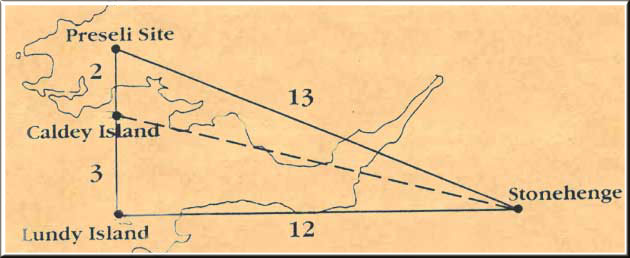
Why 1.2 then? 6 divided by 5, where 6 represents the Macro Universe (the Cosmos) and 5 the Micro Universe (Earth and Man). 'As Above, so Below' Hermetics and Masons say, and this means that what is seen in heaven, 6, must be copied below, 5, to enable harmony and the flow of energy. 5+ 6 is indeed 11: ultimate balance. The resulting aspect ration of 1.2 and 2.4 are thus used in ancient structures and distances between ancient structures such as the Great Pyramid, Stonehenge, Angkor Wat, St Peter's and the modern Washington Monument (to name just four - 666 and 6660 to 555 is the most often used measure), but also as the aspect ration of Scope cinema. Not surprisingly, the number 2.4 is also the Golden Angle in radians as defined by the Fibonacci sequence. Basically, when Ancient man saw this number return again and again in their computations, they called it sacred and magical and you can either argue that once the magical number is found, the diameter and radius of Earth and the Moon can be calculated, or it somehow happened the other way around. 2.39 is close enough to 2.4 - unless I am reaching here.
 |
| Melancholia I by Albrecht Durer [1514]. Note the 'magic square' top right, besides the heavy symbology in the rest of the painting. Including a bright comet that may well be the shining light at the top of the Great Pyramid. |
Besides being divisible by 8, 2048, 1920 and 640 can also all be divided by 32. The significance of the number 32 is great, where in Judeo/Christian and Buddhist religions 32 represents the plan, the diagram, of the various forms of creatures modeled by the Creator. 32 is also 4x8, which is considered the sacred formula of the Creator (the Great Architect). But this is somewhat of an obvious point since 32 is a multiple of 8.
It gets even more interesting when framerate is considered. From the old 24fps for film to 25fps and 29.97fps for television, there is now a step up to 50 and 60fps and then 96fps and 144fps. Projection tests have shown that human eyes prefer imagery of 60fps over both lower and higher framerates, but 72fps was not tested as a framerate. 24fps is of course 3x8fps, and it was chosen as a framerate for film because together with a triple shutter it presents 72 images (3x the same image) to the eyes, which is enough to make the brain believe the image stream is seamless. Presenting true 72fps with no shutter other than betwen actual frames would make for a truly natural film experience. But for now it's either going to be 60fps (2x29.97fps), 96fps (4x24) or 144fps (6x24 or 2x72).
So there is a link between ancient miles, Earth, Moon and Sun and digital cinema numbers - the number 8 and the ratio of 1.2. Is it all related? Well maybe so and maybe not - people like Pythagoras, daVinci, Durer, Bohme, Newton, Washington and Kubrick were all very busy putting these numbers in their work and trying to find relationships between them. The issue is that this kind of linking of numbers and significance creates a closed loop of argument, but if there really is a relationship there it is obviously important to uncover it and share it with the world - even if it is only through beautifully framed, paced, formatted and projected movies.
People often wonder about mysterious artists 'What did they know and when did they know it?'. Focusing on 3-D knowledge, the question that must be asked is what do 3-D Stereoscopic companies know and when did they learn it by? Through 3-D Revolution Productions I have known and understood the inner working of the 3-D film frame for over 12 years - and I happily continue to learn. As Socrates stated: Ultimately, 'I know I do not know' - we can but learn.

The Monolith in 2001: A Space Odyssey - a 2.4 sacred square on its side,
although it is closer to a 2.35:1 CinemaScope screen. Note the two pillars flanking monolith
and the checkered floor. A hint at Masonic & Hermetic symbolism.
Reach (for) the heavens through cinema, Kubrick is saying here.
although it is closer to a 2.35:1 CinemaScope screen. Note the two pillars flanking monolith
and the checkered floor. A hint at Masonic & Hermetic symbolism.
Reach (for) the heavens through cinema, Kubrick is saying here.
In all this one has to be aware of the fact that in the history of cinema and television the size and aspect ratio has not always been equal to sacred numbers or divisible by them. For instance, from 1895 to 1953 film sizes have included 35mm, 51mm, 55mm, 63mm, 70mm and 75mm, with projected aspects of 1.33:1, 1.37:1, 1.66:1, 1.75:1, 1.85:1, 2.21:1, 2.52:1 and 2.6:1. So there is definitely a certain current leaning towards sacred numbers over just random ones - even if this is simply because the digital world works in 8's.
 |
| Isis on her celestial boat, shining the light of Sirius |
 |
| A boy (or maybe it's a girl) in the Moon, between to piles of stacked clouds, fishing (for lobster, probably) |
Yes, even Disney starts its film logo with a shot of the stars, moving down to their castle. But wait, looking closer at the castle, a pyramid shape appears effortlessly and the angle of its slopes: yes indeed, the 52 degrees of the Great Pyramid. Even the size of the famous plastered tip matches perfectly to the geometry in the castle. So if the Disney Castle is the Great Pyramid of Giza, let's overlay the position and angle of Orion onto the logo in relation to the Great Pyramid at dawn: again a perfect fit - those stars in the Walt Disney Pictures logo are faint, but they certainly match. The top of the Orion constellation then touches the top of the highest tower, where the flag displaying the Disney family crest is touching the hand of the Father God in a similar way to God touching Adam in the Michelangelo nave fresco of the Sistine chapel. In real world relation to Orion, the position of Sirius falls exactly on the lower right tower. The eye of Horus then adorns the pyramidal roof over the main gate. Above this, although somewhat hard to make out, the High Priestess that is Isis can be seen sitting on her throne between two pillars, adorning the Sun and Moon on her head, in the tip of the main pyramid shape. Isis, the mother of the first Pharaoh (God's son), Horus, sits over the entrance of the Golden Gate, below Isis, while Osisris points his Orion's belt (male 'sword', rather) at her. The result is the entrance to a Heavenly palace where magic happens. Whee! The whole thing is then topped off by the obvious element of the location on the river bank, which invokes the ancient position of the river Nile.
Showing a Pyramid at the front of every movie and television programme produced or distributed by Disney means they really do wish to invoke the power and protection of the gods and the 'As Above, So Below' flipping of the Pyramid to make a Star of David fits tips of spires and Disney lettering as well - mind you, this is a Masonic / Hermetic tradition and here, has little to do with the Star of David (much though this is the same symbol). It is certain, however, that Disney Pictures is invoking the spirit and power of Osiris, Isis and Horus here for success, protection and instinctive audience approval. You have to admit: it has certainly worked for Disney so far! As such I wouldn't say it is an evil or sinister thing to do and I can understand the (historical, religious) reasons why people invoking the power of the stars have to keep the symbology hidden in plain sight. Especially when you are the biggest media company in the world or indeed the first president of the newly formed United States of America, city builder of Rome, Paris or the City of London.
 |
| Well hidden Ancient Egyptian symbols and measures in the logo of Walt Disney Pictures. Movie Magic indeed. |
The logo of '3-D Revolution Productions' only refers to the Russian Revolution and the 3-D resurgence of 1999 to today and tomorrow. A nod at the sacred geometry that 3-D can and should be is the new motto of 3-D Revolution Productions: 'Ut Uno Oculo, Duo Aeque': 'As with one eye, so with two'. Ultimate cinematography in 2-D as well as in 3-D, not despite the 3-D.

3-D Revolution Productions
- 3D Stereoscopic animation consultancy and stereoscopic animation production services in Bristol, UK.
- Stereoscopic animation and live-action production assistance for feature film and television series and specials.
- Specialized in children's media, kids television and film.
- Mobile, handheld tablet, pad & phone stereoscopic production, consultancy and content porting
- 2D to 3D conversion for film, television and mobile
Contact us:
Tel. +44 1179 441 449
info [at] the3drevolution.com


 Posts
Posts